Just like a pair of jeans - Finding the right “fit” with a psychologist

When you go to buy a pair of jeans it is normal to try on a few pairs before you find the right fit. The first few you try on may be uncomfortable, too tight, loose, or just don’t sit right but you know when you find the pair that fit the best. Similar to when you buy a pair of jeans, we sometimes need to spend some time finding a psychologist who fits the best for us.
It is important to keep in mind that for many people seeing a psychologist is not an enjoyable experience. It is often a time when things are not going well for us, and psychology sessions are a space we use to start addressing what is going on in our lives. As such, psychology appointments are not always going to feel comfortable or easy, but it is still important that you find a psychologist who helps you to feel safe within the therapy space to achieve results.
It can help to first understand the role of the psychologist. This can start by:
Recognising their expertise: Understand that your psychologist is trained to listen without judgment and offer guidance.
Viewing them as a partner: Think of your psychologist as a collaborative partner in your journey to well-being.
A good therapeutic relationship should include the following:
1) You are given space to ask questions and speak honestly (i.e. your clinician asks you to discuss/do something you know you are not ready to discuss/do - you can say no!)
2) Your therapist explains the treatment plan and the reasoning for using that method
3) Your therapist does not make the session about themselves – it is normal for some clinicians to make some personal disclosures when it may be helpful but it is important that the focus of the session is on you, you’re the one paying for the service. If at any time you feel as though you are counselling your psychologist or feel like you need to hold something back so you do not upset your psychologist, it may be time to seek alternative support.
4) You work with your psychologist to create and address shared goals.
Within the field of psychology, there are a number of different evidence-based treatments available and psychologists tend to have a treatment method that they prefer to use. In some instances, it may be that their method of treatment or way of addressing psychological issues just isn’t the right fit for you. In the case where you do not feel it is the right fit, it is absolutely within your right to seek alternative support and to ask your therapist if they have any recommendations.
Seeing a psychologist is an investment in your well-being and you want to make sure that your investment pays off. This means that you may need to try out different psychologists until you find the right fit.
Content by: Courtney Lander
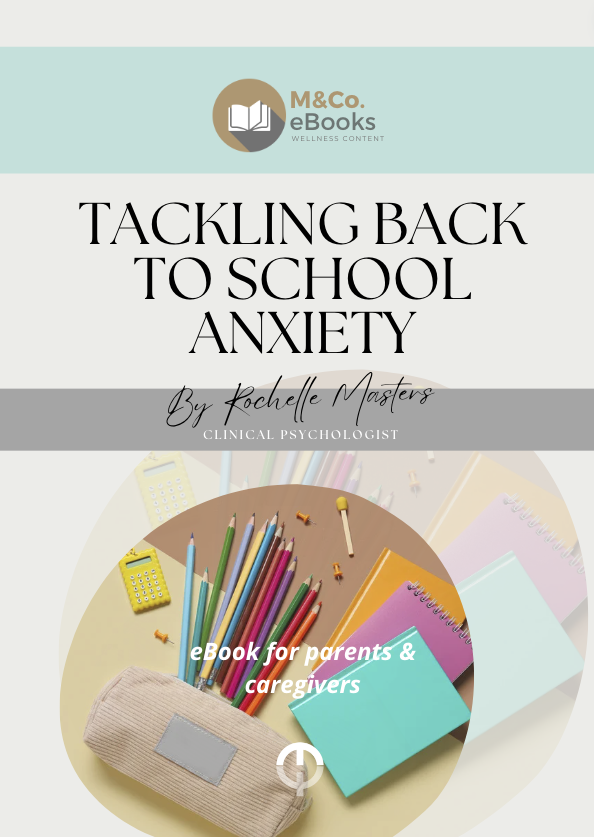
Welcome to the Tackling Back-to-School Anxiety eBook, where you can take learn the strategies, tips and tricks we found that may assist to manage your child’s worries about going back to school (and perhaps even some of your own). Inside you will find outlined, easy to digest, information and practical activities to share with your child to help manage this transition. We hope this serves you and your child well in learning to better tackle back-to-school worries, making returning to school a positive experience.
Inside you will find information on:
1. What is normal anxiety?
2. Recognising when things get worse
3. Is it just situational?
4. The warning signs associated with back-to-school anxiety
5. Are you modelling anxious behaviour?
6. 10 Tips n' Tricks (strategies and interactive activities to do with your child)
7. How to use the information we’ve provided and when, where and how to seek
further assistance.
2 for 1 OFFER when you purchase the School Anxiety eBook.
Receive free when you add this eBook to your cart - Tackling Anxiety in Kids eBook - then add this CODE - ANXIETY100 at the checkout. See the sample cart on page.

This eBook was created as an introduction to self-compassion. From this workbook you may start to consider the impact that practicing self-compassion has on your daily living. Think about how you react and treat yourself after a difficult time. Although there can be feelings of pain, stress, frustration and sadness, I want you to know that we can also love ourselves through this process. Imagine when our children scrape their knee or break up with their first partner in their teen years. Regardless of our child's age/issue we respond by acknowledging their pain and offering kindness. As a result, our kids feel acknowledged and cared for. What a powerful experience, so imagine if we practiced that same approach towards ourselves.
This eBook has 17 pages and has space to fill out answers and reflections.

Build a Stronger, More Passionate Relationships with Psychology-Based Insights! Stronger love starts here! Discover how to deepen intimacy, improve communication, and build a lasting, passionate relationship. This psychology-based guide explores attachment styles, emotional connection, and conflict resolution—helping you and your partner grow together. Perfect for couples ready to strengthen their bond!
In today's fast-paced world, where genuine connections can sometimes feel elusive, the pursuit of meaningful intimacy is more important than ever. Through my years of experience working with individuals and couples, I've come to understand the profound impact that deep, authentic relationships have on our overall well-being.
In this eBook, we'll embark on a journey to explore the various facets of intimacy, from understanding the stages of relationships to unravelling the intricacies of attachment styles. We'll delve into the importance of open communication, mutual respect, and the cultivation of emotional bonds that form the foundation of lasting connections.
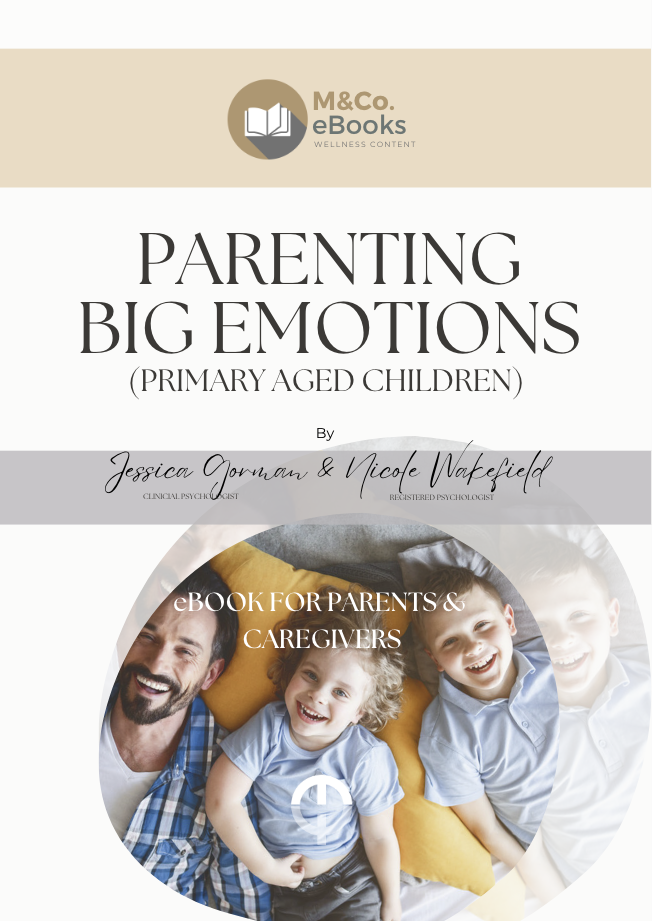
In this eBook, we will explore the topic of "Parenting Big Emotions." We will start with brain development and emotions, followed by understanding typical emotional responses. Then, we will delve into the when, what, and how to take action when emotions run high. We will also discuss, establishing emotional stability in kids, and role modeling self-regulation, self-awareness, and resilience.